

When Fiction Predicts the Future

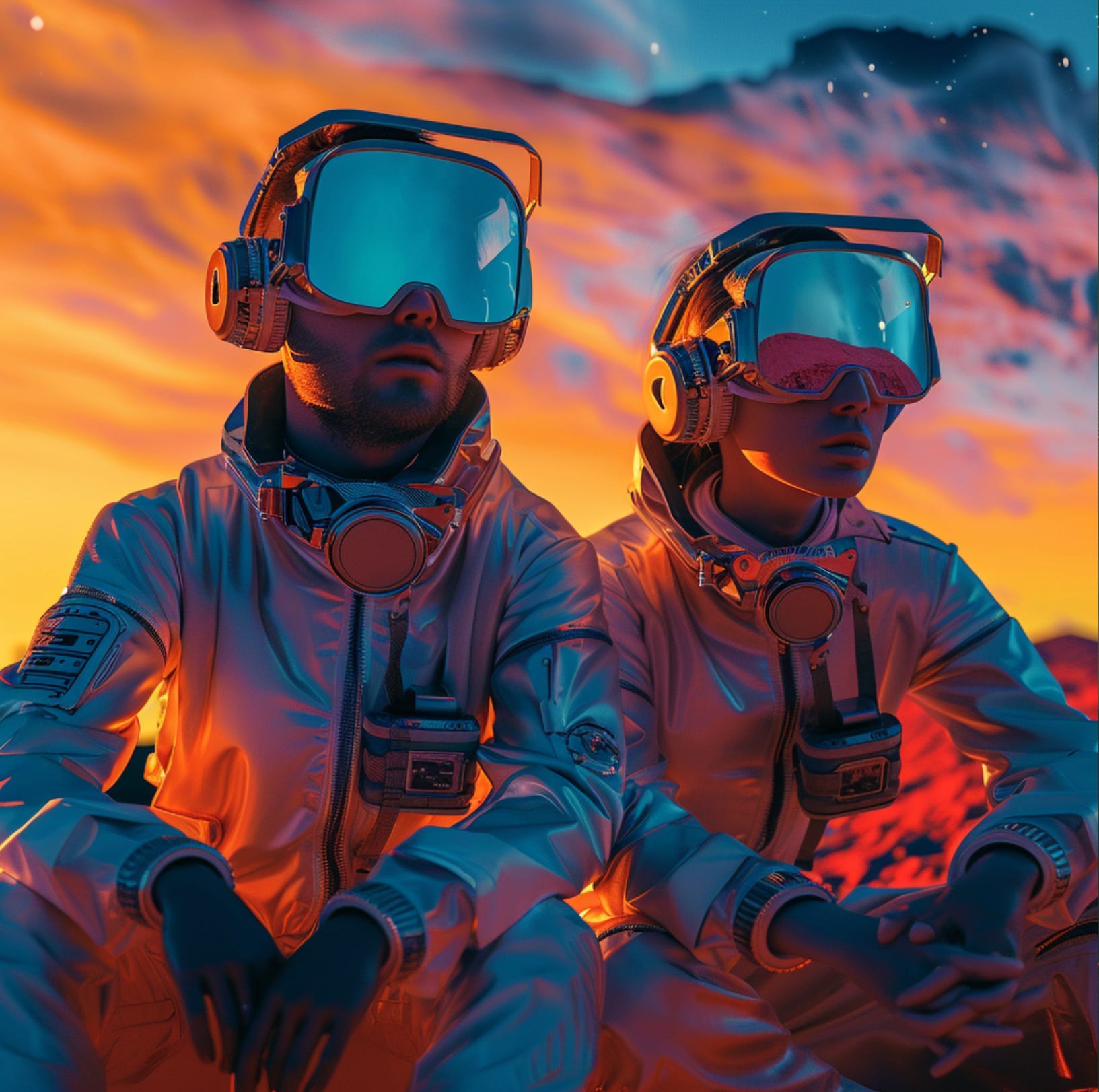
Fiction has always been a playground for imagination, but sometimes novelists tap into the realm of uncanny foresight, predicting future events and technological advancements with remarkable accuracy. These instances blur the lines between speculative fiction and prophecy showcasing the power of literature to foresee what lies ahead. Here are five notable examples of fiction that predicted the future, along with quotes that eerily align with real-world developments.
1. 1984 by George Orwell (1949)
George Orwell's dystopian novel 1984 envisioned a future where totalitarian regimes wielded technology to maintain strict surveillance over their citizens. The concept of "Big Brother" has become synonymous with government overreach and privacy invasion in the digital age.
Quote: "Big Brother is watching you."
Today, Orwell's vision is realized in various ways, from government surveillance programs to the pervasive presence of CCTV cameras, face recognition software in China and data collection by tech giants. The notion that our every move can be monitored resonates deeply in an era of advanced surveillance technologies.
2. Brave New World by Aldous Huxley (1932)
Aldous Huxley's Brave New World depicted a society driven by consumerism, genetic engineering and a population kept docile through a drug called "soma." Huxley's foresight into the dangers of technological and pharmaceutical control has parallels in today's world.
Quote: "A gramme is better than a damn."
The increasing reliance on pharmaceuticals to manage mental health, alongside advancements in genetic engineering and the omnipresence of consumer culture, mirror Huxley's warnings about a future where human individuality and freedom are compromised.
3. Fahrenheit 451 by Ray Bradbury (1953)
In Fahrenheit 451, Ray Bradbury presented a future where books are banned, and "firemen" burn any that are found. The novel explores themes of censorship, the decline of literature and the impact of media on society.
Quote: "It was a pleasure to burn."
Bradbury's work is strikingly relevant in an age of digital media, where the written word faces challenges from shorter attention spans, the proliferation of misinformation and the suppression of dissenting voices.
4. Neuromancer by William Gibson (1984)
William Gibson's Neuromancer is credited with pioneering the cyberpunk genre and predicting the rise of the internet and virtual reality. The novel's depiction of a connected, digital world has profound parallels with our current reality.
Quote: "The sky above the port was the color of television, tuned to a dead channel."
Gibson's envisioning of cyberspace and the matrix foreshadowed the internet's development and our immersion in digital environments, making Neuromancer a visionary work that captured the essence of the digital revolution.
5. The Running Man by Stephen King (as Richard Bachman) (1982)
Stephen King's The Running Man portrayed a future where reality television has taken a dark turn, with contestants participating in a deadly game show. The novel's exploration of media exploitation and voyeurism predicted the rise of reality TV and its ethical implications.
Quote: "Say my name over the air. Acknowledge my existence."
The proliferation of reality television shows, where contestants often undergo extreme situations for entertainment, reflects King's dystopian vision of a media-saturated society obsessed with spectacle and ratings.
These novels remind us that fiction can serve as a lens through which we examine our present and anticipate our future. The prophetic insights of Orwell, Huxley, Bradbury, Gibson and King demonstrate the enduring power of literature to illuminate the path ahead, sometimes with chilling accuracy. As we navigate an increasingly complex world, these works offer both cautionary tales and profound reflections on the trajectory of human civilization.
One of the reasons that I love science fiction so much, and spent my youth reaading all (and I do mean all) classic sci-fi novels from the time known as the golden age of science fiction, is that reality is often found in their pages, even if it is a future reality. Science fiction enabled me to experience the future, although I am not happy to now live in an age where Orwell's "1984" has, in some ways, come to life, and where for many politicians, a lie is just another form of the truth. But reading your wonderful essay reminded me that Huxley himself wrote a kind of antidote to "Brave New World." Titled "Island," it takes place in utopia, where drugs like soma help humans experience peace and love. I believe that "Island" is mentioned in "Brave New World" as a place to which those who 'failed' that dystopian world were banished. In what was Huxley's last published work, mynah birds constantly circle above, crying out "Attention! Attention!" - to remind us to be mindful - and "Karuna, Karuna!," which translates to compassion. I still sometimes pretend those birds are circling above in my own sky.