

The Holey Land
The American Idea of Preservation

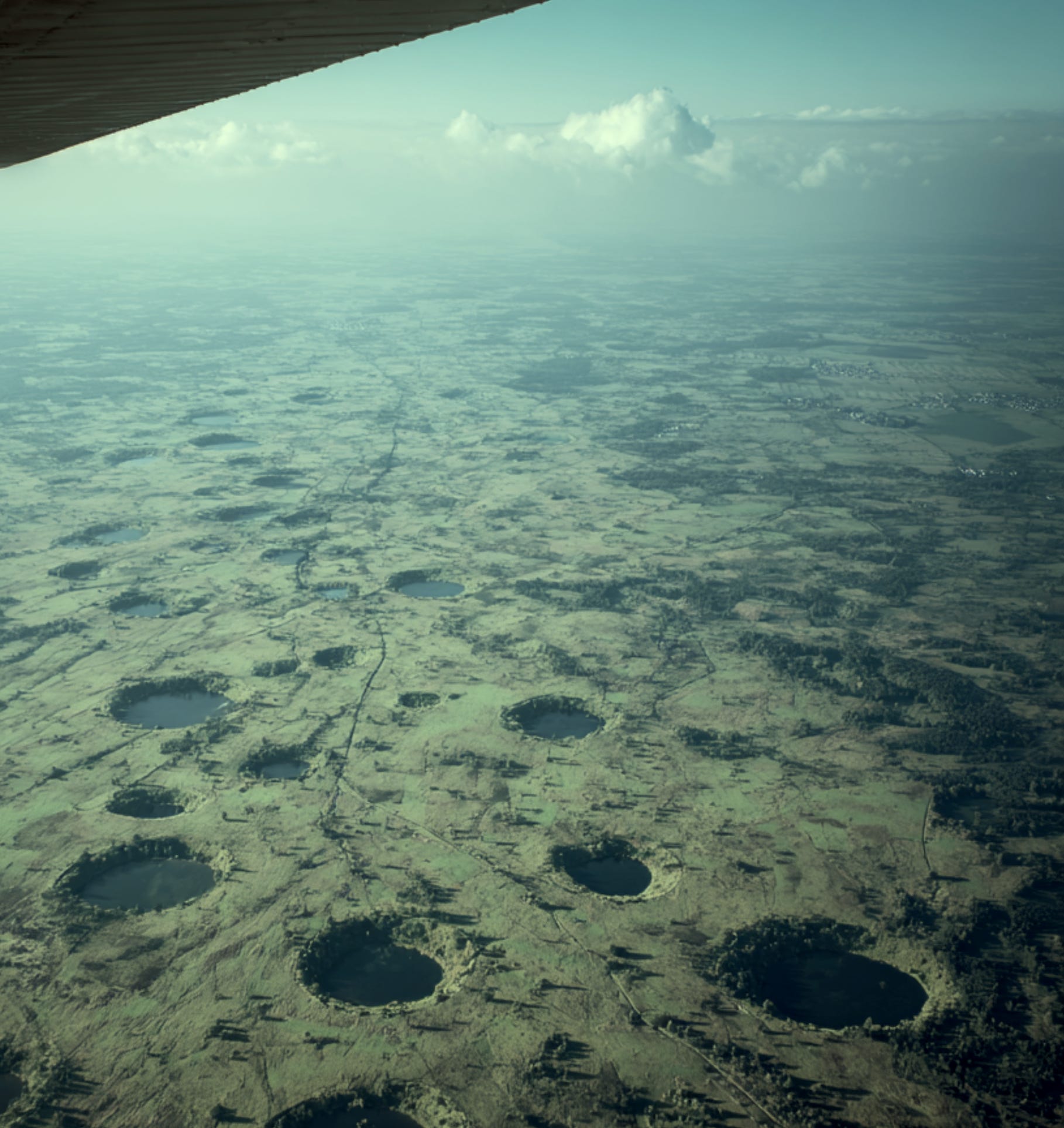
Last week I flew into West Palm Beach. As the plane approached the airport from the west, I looked out my window and was suddenly flooded with thoughts of the Everglades and the role of man in reshaping nature.
South of Lake Okeechobee
Just south of Lake Okeechobee, in Palm Beach County, Florida, is a landscape that seems both accidental and deliberate. The “Holey Land” stretches southward in shallow pools, broken marsh and quiet levees, a terrain marked by depressions that gave it its unusual name. To a casual observer, it may appear simply another remote wildlife management area, but the history of this place echoes a much larger American story, the recurring tension between conquest of nature and the urge to preserve it.
The Everglades
Long before it carried its peculiar name, the Holey Land was part of the Everglades’ ancient river of grass. Water once flowed slowly south from Lake Okeechobee in a wide, shallow sheet, shaping a landscape defined not by boundaries but by motion. Indigenous communities lived along these waters for centuries, adapting to cycles of flood and drought that governed life across the marsh. The land was not empty wilderness; it was a functioning ecosystem sustained by patience and rhythm. Yet as the twentieth century began, Americans saw the Everglades less as a living system and more as a frontier waiting to be transformed.
The Hurricane
One of the defining moments came with the hurricane of 1928, a catastrophe that reshaped both the landscape and the national conscience. When the storm drove Lake Okeechobee’s waters over its low natural banks, entire farming communities, including those around Clewiston and neighboring Glades towns, were overwhelmed by a sudden inland sea. Thousands of residents, many of them agricultural workers living in low-lying settlements, lost their lives in what remains one of the deadliest natural disasters in Florida history.
The Hoover Dike
In the aftermath, the federal government recognized that the dream of draining and farming the Everglades could not continue without massive protection from the lake itself. The result was the construction of the Herbert Hoover Dike, an immense earthen barrier encircling the lake that transformed the hydrology of South Florida. While the dike provided a sense of safety for growing agricultural communities, it also marked a turning point in America’s relationship with the Everglades, a moment when tragedy accelerated engineering, reshaping the flow of water and setting the stage for landscapes like the Holey Land to exist within a controlled and managed system rather than a free-moving river of grass.
Draining the Swamp
The drive to drain the wetlands reflected a national impulse that had already reshaped the continent. Just as forests had been cleared in the Northeast and prairies turned into farmland across the Midwest, engineers carved canals into the muck south of Lake Okeechobee to reclaim soil for agriculture. The effort mirrored a long American belief that progress meant control, that rivers could be redirected, landscapes redesigned and swamps made productive. Sugarcane fields and vegetable farms spread across the region, and the western edge of Palm Beach County became an agricultural engine built upon the drained remnants of the Everglades with some of the blackest, most fertile soil in North America.
The Holey Land
South of that area, the story of the Holey Land slowly evolved. Rumors persist to this day about the unusual craters dotting the terrain. Whether every depression came from practice military bombing runs during World War II or from the collapse of peat soils, the “holes” became symbols of a landscape altered by human ambitions.
Fresh Water Demands
After the war, vast flood-control projects of levees and canals were constructed around Lake Okeechobee, turning fresh water into a managed commodity. The Everglades’ slow movement southward was interrupted by gates and pumps designed not only to protect growing cities on the coast but to supply them with potable water.
The Holey Land existed in this engineered world as an in-between space, neither fully agricultural nor entirely wild. Its marshes held wildlife, but its water levels followed human schedules. It was a landscape caught between eras, much like the nation during the decades when highways, suburbs and dams reshaped the American horizon.
In many ways, this uniquely beautiful place reflected America itself during the mid-twentieth century, confident in engineering and convinced that the future could be built through infrastructure and human control.
Yet the story did not end with conquest. By the late twentieth century, a different national impulse began to assert itself, the recognition that some places needed protection precisely because they had been changed. Across the United States, the creation of national parks, wildlife refuges and conservation lands reflected a deepening belief that preservation was not an obstacle to progress but an important form of cultural memory. Yellowstone, Yosemite and the Everglades themselves stood as iconic reminders that Americans, having transformed so much of the continent, also sought spaces where nature could endure.
A Unique Wildlife Management Area
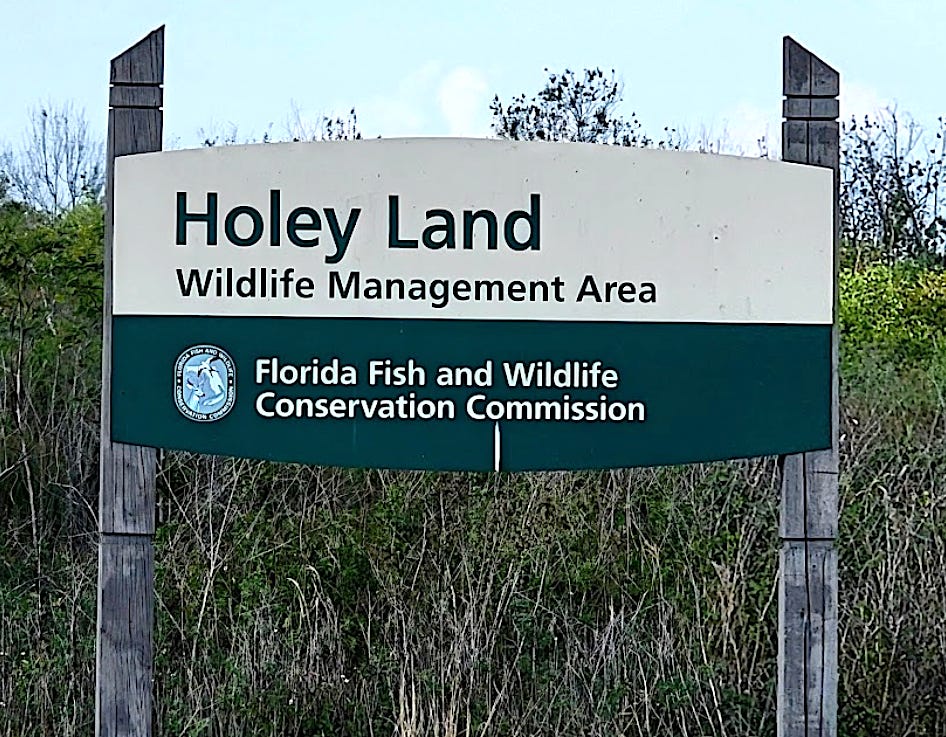
The designation of the Holey Land as a wildlife management area placed it within this tradition. Hunters, birdwatchers and anglers began to experience the marsh not as a failed agricultural experiment but as a living refuge. Restoration efforts allowed water to return to parts of the landscape, even as new challenges emerged from decades of altered hydrology. The place became both sanctuary and lesson, proof that preservation in America often arrives only after transformation has gone too far to ignore.
The future of the Everglades remains uncertain, shaped by climate, development and the continuing effort to balance human needs with ecological survival. Yet the Holey Land stands quietly within that uncertainty, a landscape shaped by history but still alive with possibility. Like the national parks carved from earlier frontiers, it suggests that preservation is not a single decision but an ongoing act, reminding us of what has been lost and what might still be.
My column sees the world through the lens of Americana and focuses primarily on the culture and history of the United States. It uses the latest technological innovations combined with over seven decades of personal experience to create a vehicle that helps to communicate issues that have resonated throughout the history of the American experiment. My column is free to all.