

Economic Warning Signs

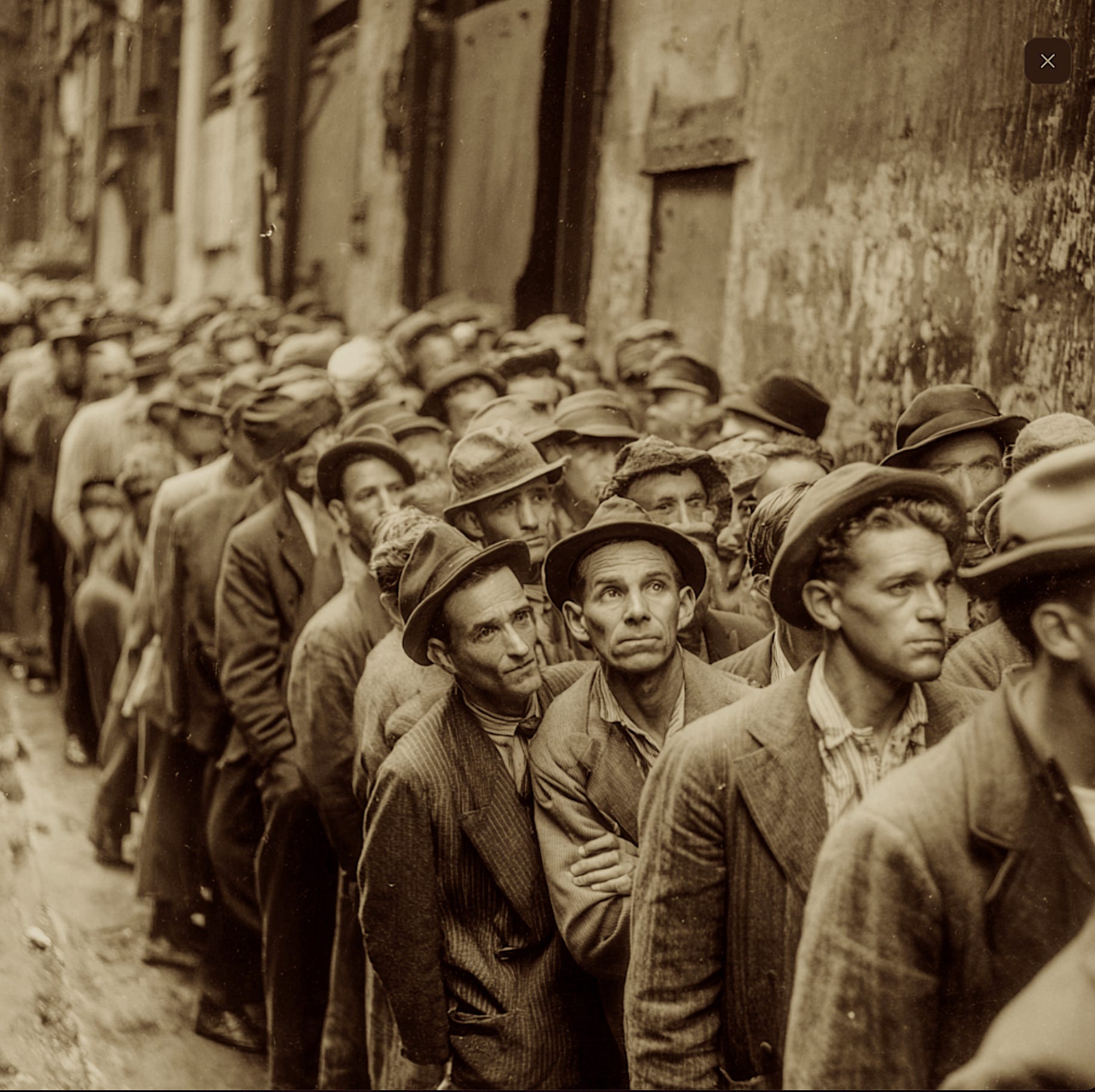
American economic history has a strange habit of rhyming. The specific technologies and financial instruments change, but the warning signs that appear before major collapses look uncannily familiar. From the Panic of 1837 to the Long Depression of the 1870s, from 1929 to 2008, the U.S. economy has repeatedly broadcast distress signals before it cracked. The players change but the script generally stays the same.
Speculative Mania
The first recurring signal is speculative mania. In nearly every major downturn, an asset bubble forms that convinces people ordinary rules no longer apply. In the 1830s it was land speculation fueled by easy credit. In the 1920s it was stocks bought on margin. In the early 2000s it was housing, wrapped in mortgage-backed securities and blessed with the illusion of AAA safety. The story is always that this time is different: land can’t lose value, corporations will grow forever, housing prices never fall nationwide. When large numbers of people start treating investment as destiny rather than risk, collapse is usually nearby.
Easy Credit & Financial Innovation
Closely tied to speculation is easy credit and financial innovation. Before almost every crash, borrowing becomes unusually cheap and unusually creative. New financial products appear that promise to spread risk but often concentrate it instead. The lead-up to 1929 saw margin loans expand rapidly; the years before 2008 saw derivatives multiply beyond what regulators or even their creators fully understood. Innovation itself is not the danger, unchecked leverage is. When prosperity depends more on debt than on income, the system becomes brittle.
Inequality & Wage Stagnation
Another repeated warning sign is growing inequality and wage stagnation. In the late 1920s, productivity rose but wages lagged behind, leaving households dependent on credit to maintain living standards. Similar patterns appeared before 2008, when real wages were flat, but consumption continued via borrowing. This creates a fragile economy: demand looks strong on paper, but it is powered by loans rather than paychecks. When credit tightens, consumption collapses and recession follows.
Market Concentration & Corporate Overconfidence
A third signal is market concentration and corporate overconfidence. Before major downturns, dominant firms often grow larger and riskier. Railroads before the Panic of 1893 expanded aggressively on borrowed money. Banks and financial conglomerates before 2008 grew “too big to fail,” taking on leverage under the assumption they would be rescued if things went wrong. This belief in implicit safety nets encourages reckless behavior and amplifies the damage when the system breaks.
Denial & Delay
There is also a political pattern: denial and delay. Leaders frequently insist the economy is fundamentally sound just as cracks are widening. In 1929, officials downplayed stock market instability. In 2007, regulators spoke of “contained” problems in subprime mortgages. Warnings from critics are dismissed as pessimism, and policy responses come late, often after markets have already begun to unravel. Optimism becomes a form of paralysis.
The Grand Mismatch
Finally, collapses are usually preceded by a mismatch between the real economy and the financial economy. Production, wages and employment stop growing in step with asset prices. Stocks, land or housing soar while factories, farms and workers struggle to keep pace. This divergence is one of the clearest danger signs in hindsight. When wealth seems to multiply without corresponding growth in goods or incomes, it is usually debt and speculation doing the work, not sustainable productivity.
Across two centuries of crises throughout American history, these signals repeat: speculative bubbles, easy credit, rising inequality, oversized institutions, political denial and financial markets drifting away from economic reality. None of them alone guarantees collapse. Together, they form a pattern as old as American capitalism itself.
What history suggests is not that crashes are unpredictable. Warning signs are visible, yet ignored, because acknowledging them would require slowing growth, limiting credit or challenging powerful interests.
The lesson from history is clear: Before America’s greatest economic breakdowns, the danger was not hidden. It was rationalized.
My column sees the world through the lens of Americana and focuses primarily on the culture and history of the United States. It uses the latest technological innovations combined with over seven decades of personal experience to create a vehicle that helps to communicate issues that have resonated throughout the history of the American experiment. My column is free to all.